

Long COVID Treatment in Redondo Beach
A clinically supervised, measured approach for persistent symptoms.
Using narrowband UVB for Long COVID symptoms is off-label. Research on NB-UVB for these symptoms is still early, which is why we measure how you respond.
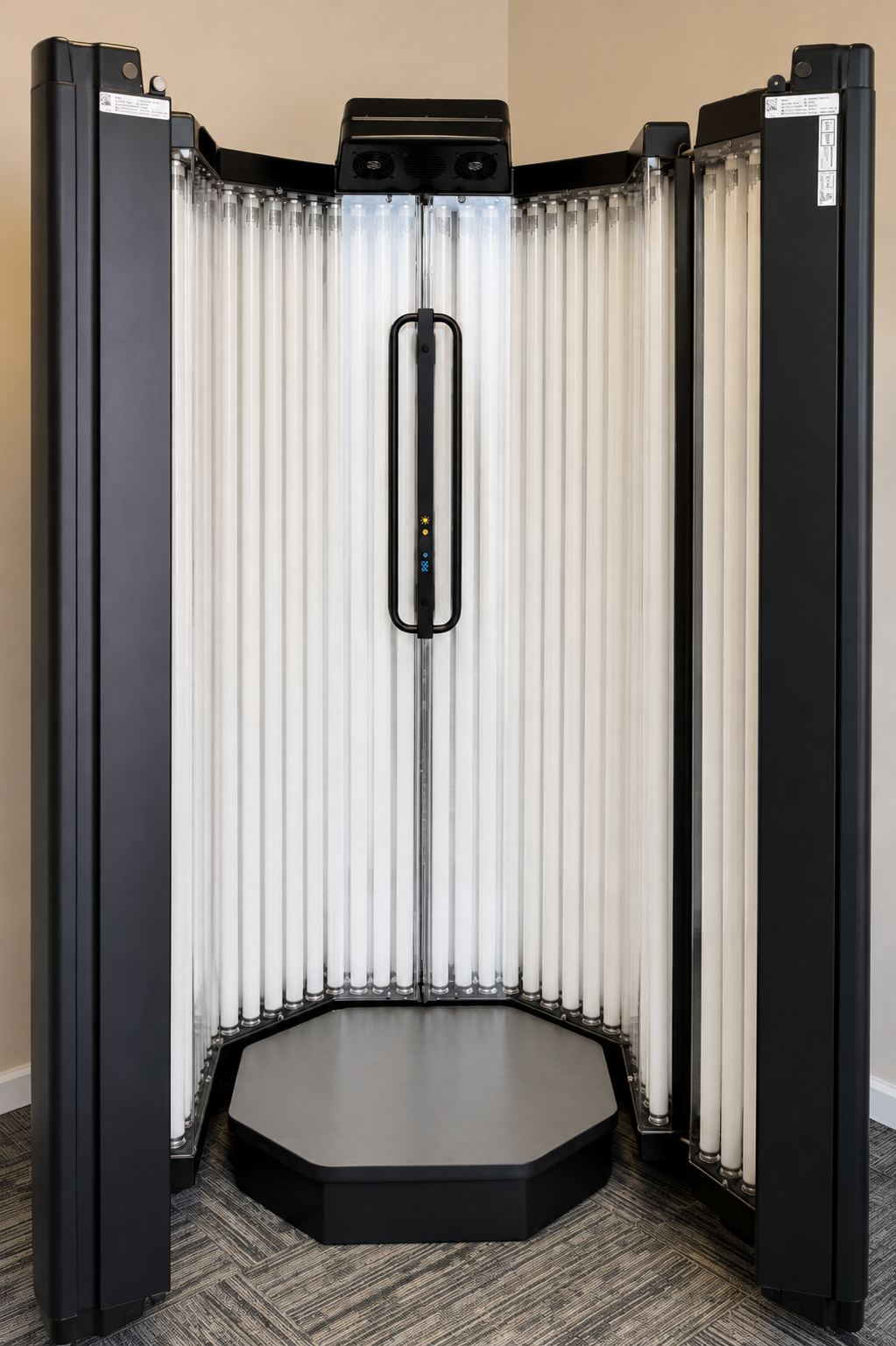
When Symptoms Don’t Go Away
Long COVID can look different from one person to the next. For some people, the initial infection is over but symptoms such as fatigue, brain fog, poor sleep, and reduced day-to-day function continue.
Darian Light offers a structured, clinically supervised narrowband UVB program for adults living with persistent Long COVID symptoms who are interested in exploring an additional treatment option.
We evaluate carefully, treat consistently, and track how you feel and function over time.
Common symptoms we may evaluate include:
- Fatigue
- Brain fog or cognitive symptoms
- Poor or disrupted sleep
- Reduced stamina
- Difficulty keeping up with work or daily activities
- Other persistent symptoms affecting day-to-day function
Why Narrowband UVB?
Narrowband UVB (NB-UVB) is a specific wavelength of ultraviolet light and a well-established immunomodulatory and anti-inflammatory therapy in dermatology, with some immune effects measurable systemically.
Long COVID is also associated with complex changes in immune function and inflammation, but many questions remain about what drives persistent symptoms from one patient to another.
Whether NB-UVB could play a meaningful role in Long COVID has not yet been studied.
That is why Darian Light takes a measured approach: exploring the treatment carefully while tracking whether each patient experiences meaningful changes in symptoms or function.
A Measured Approach
We don’t just hope treatment is helping. We measure.
Every patient completes the same standardized outcome measures at defined points during treatment, including measures of fatigue, sleep, and overall change. We also track brain fog, cognitive symptoms, day-to-day function, and other symptoms that matter to the individual patient. That lets us look at change over time instead of relying on a vague impression of whether treatment is working.
These measures don’t prove that NB-UVB caused any change, but they guide decisions about whether continuing makes sense for you.
Care is provided by Bevens Goodman, FNP-C, who has eight years of NB-UVB experience, under physician medical director oversight.
What Treatment Looks Like
Complimentary screening call
The process starts with a brief screening call to learn more about what you are experiencing and determine whether a clinical evaluation may make sense.
Clinical evaluation
If you move forward, your evaluation includes review of:
- Your Long COVID symptoms and how they affect daily life
- Medical history
- Current medications
- Photosensitivity risk
- Skin cancer and melanoma history
- Prior reactions to light or phototherapy
- Other factors relevant to safe treatment planning
A clinical evaluation does not guarantee that treatment will be recommended.
Individualized NB-UVB treatment
For patients who are appropriate candidates, treatment is generally provided 2–3 times per week. NB-UVB dosing is individualized and adjusted over time based on the treatment schedule, skin response, and other clinical factors.
Check-ins at every visit
Each visit includes a brief check-in so your dose stays matched to your skin response, and your symptoms are measured at set points throughout the course.
Review the response
At key points during treatment, we review how you are doing and whether continuing makes sense. The goal is simple: determine whether you are experiencing enough meaningful change to justify continued treatment.
Who May Be Evaluated?
Darian Light evaluates adults living with persistent symptoms after COVID-19 who are interested in exploring narrowband UVB and can participate safely in treatment.
Every patient receives an individual clinical evaluation before treatment is recommended. This includes review of medical history, medications, photosensitivity risk, skin cancer history, current symptoms, and other factors relevant to candidacy and safe treatment planning.
Not everyone is an appropriate candidate for NB-UVB.
What We Know — And What We Don’t
What we know
- Narrowband UVB has been used medically for decades, particularly in dermatology.
- Narrowband UVB is a well-established immunomodulatory and anti-inflammatory therapy, particularly in dermatology, with some immune effects measurable systemically.
- NB-UVB can be delivered using standardized dosing, safety precautions, and clinical monitoring.
- Long COVID can involve persistent symptoms including fatigue, cognitive symptoms, sleep disturbance, and reduced function.
What we don’t know
- Whether NB-UVB improves Long COVID symptoms.
- Which patients, if any, are most likely to respond.
- How large any benefit might be.
- Whether any improvement would persist after treatment ends.
That uncertainty is exactly why Darian Light uses careful patient selection, individualized dosing, clinical oversight, and structured measurement of response.
Frequently Asked Questions
Is narrowband UVB an established treatment for Long COVID?
No. Using NB-UVB for Long COVID symptoms is off-label, and it has not yet been studied in Long COVID. That is why we measure symptoms and function throughout treatment.
Is narrowband UVB safe?
NB-UVB has been used in dermatology for decades, including in children and during pregnancy, and is generally well tolerated when appropriately dosed and monitored. Common short-term side effects include temporary redness, tenderness, itching, or dryness. Individual risks are reviewed during your clinical evaluation.
Is narrowband UVB the same as red light therapy?
No. Narrowband UVB uses a specific wavelength of ultraviolet B light. Red light therapy generally uses red and/or near-infrared wavelengths. They are different forms of light therapy with different biological effects, evidence bases, and safety considerations.
Is narrowband UVB the same as a tanning bed?
No. Medical narrowband UVB uses a controlled wavelength of UVB and is delivered using individualized dosing and clinical monitoring.
What Long COVID symptoms do you track?
We use standardized measures of fatigue, sleep, and overall change, along with clinical tracking of brain fog, cognitive symptoms, day-to-day function, and other symptoms important to the individual patient. Long COVID is sometimes also called long-haul COVID, and symptoms can vary significantly from person to person.
Can I be evaluated if I have POTS?
Potentially. POTS does not automatically rule someone in or out of treatment, but symptoms such as orthostatic intolerance and heat sensitivity are important considerations. The booth can become warm during longer treatments, so heat sensitivity is part of the evaluation.
How often is treatment?
Treatment is generally provided 2–3 times per week.
How long does each treatment take?
The light exposure itself is brief. Early treatments last about 20 seconds, and later sessions typically last up to about 5 minutes.
Do I need a referral?
No referral is needed to request a screening call or evaluation. If you’re working with other clinicians for Long COVID or related conditions, we’re happy to communicate with them with your permission.
Does insurance cover treatment?
Treatment is self-pay. HSA and FSA payments are accepted.
Where is Darian Light located?
Darian Light is located in Redondo Beach, California, serving patients from the South Bay and greater Los Angeles area.
Wondering whether you might be a candidate?
Every patient starts with a complimentary screening call. We’ll learn more about your symptoms, answer questions about the program, and determine whether a clinical evaluation may make sense.
If you move forward, your evaluation includes review of your medical history, medications, photosensitivity risk, current symptoms, and other factors relevant to safe treatment planning.